
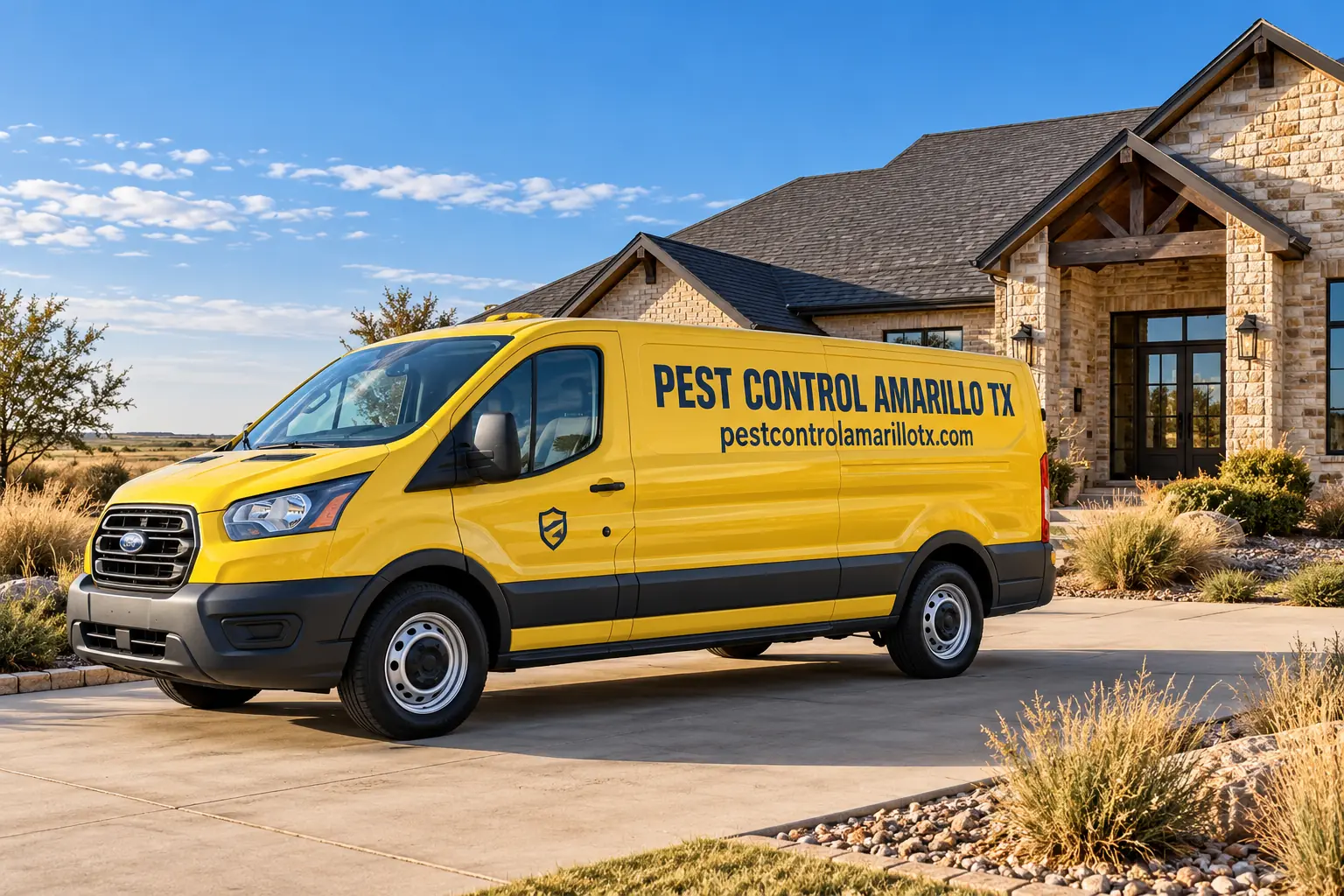

Take back your space
The line of ants beside the sink. The movement under the refrigerator after dark. A scratching sound above a bedroom that makes everyone stop talking. Pest problems interrupt ordinary life before they become a well-defined service request. You do not need to identify a species perfectly or know which product to ask for. A useful first step is to describe what you can see, where it happens, and what has changed.
Pest Control Amarillo TX helps you turn those observations into a practical next step. Explore the relevant service, understand the questions an inspection should answer and compare a proposal with a clear sense of scope. The goal is straightforward: a treatment decision that fits your property, supported by an explanation you can use. Start with the strongest evidence, keep the uncertainty honest and ask for a plan that explains how progress will be checked.
Start at the property line
Amarillo homes connect indoor living spaces with garages, yards, storage areas and outdoor equipment. A useful pest review follows those connections. A worn garage seal matters when movement is concentrated along the garage wall. A leaking connection under a kitchen cabinet matters when insects keep returning to that exact corner. A stack of materials against a building matters when it prevents inspection of the foundation behind it.
The High Plains setting gives this brand its local focus, but a city name cannot diagnose a house. We do not label whole neighborhoods as infested or assume a particular pest is present because the property is in Potter or Randall County. Your actual signs, the building layout and the accessible inspection findings should determine the recommendation. That keeps the conversation specific and helps prevent an ordinary maintenance issue from turning into an unnecessary treatment package.
Choose the right starting point
Different pests call for different questions. Ant control examines trails and colony activity. Cockroach control asks whether insects are breeding indoors or entering from another location. Termite work requires a careful assessment of wood-destroying insect evidence. Rodent control must connect removal with the openings and resources that allowed access. Spider management considers both the spider and the conditions supporting repeated sightings.
Choosing a service page does not commit you to that diagnosis. Use the page closest to what you have noticed and keep an open category for anything uncertain. A clear photograph taken without approaching or disturbing the pest can help a qualified professional, but a blurred image should not become the basis of a confident species claim. When you have more than one concern, list each separately so a future inspection can distinguish connected problems from unrelated sightings.
| What you notice | Start with | What needs confirming |
|---|---|---|
| A repeated trail near food or water | Ant control | Species, trail origin and any indoor nesting evidence |
| Roaches near appliances or cabinets | Cockroach control | Indoor breeding, entry routes and the extent of activity |
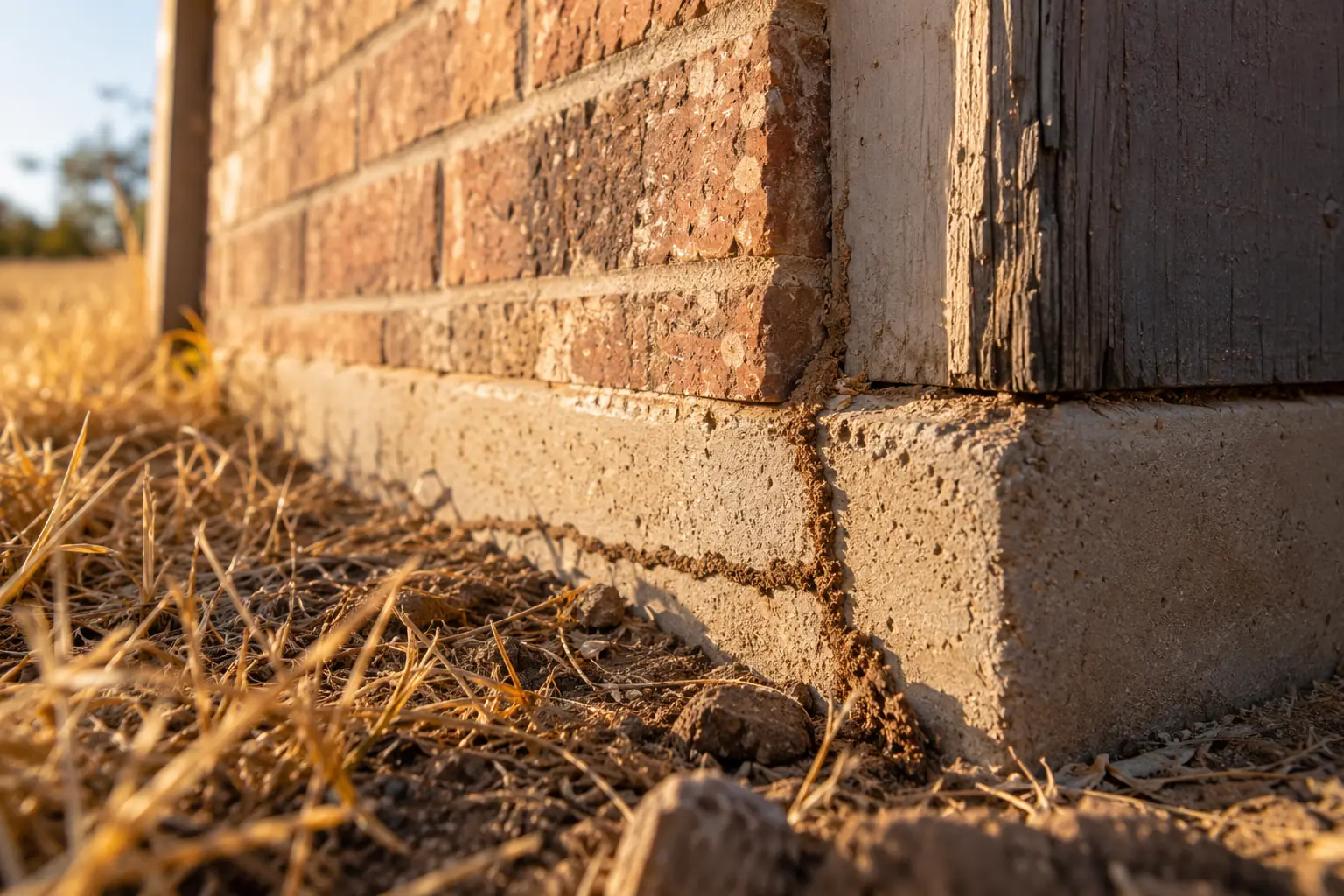
| Mud-like tubes or unexplained wood damage | Termite control | Whether the evidence is termite related and currently active |
| Gnawing, droppings or repeated noises | Rodent control | Animal identification, entry points and affected spaces |
| Recurring webs or spiders in occupied areas | Spider control | Identification, sheltered areas and associated insect activity |
Build a better first report
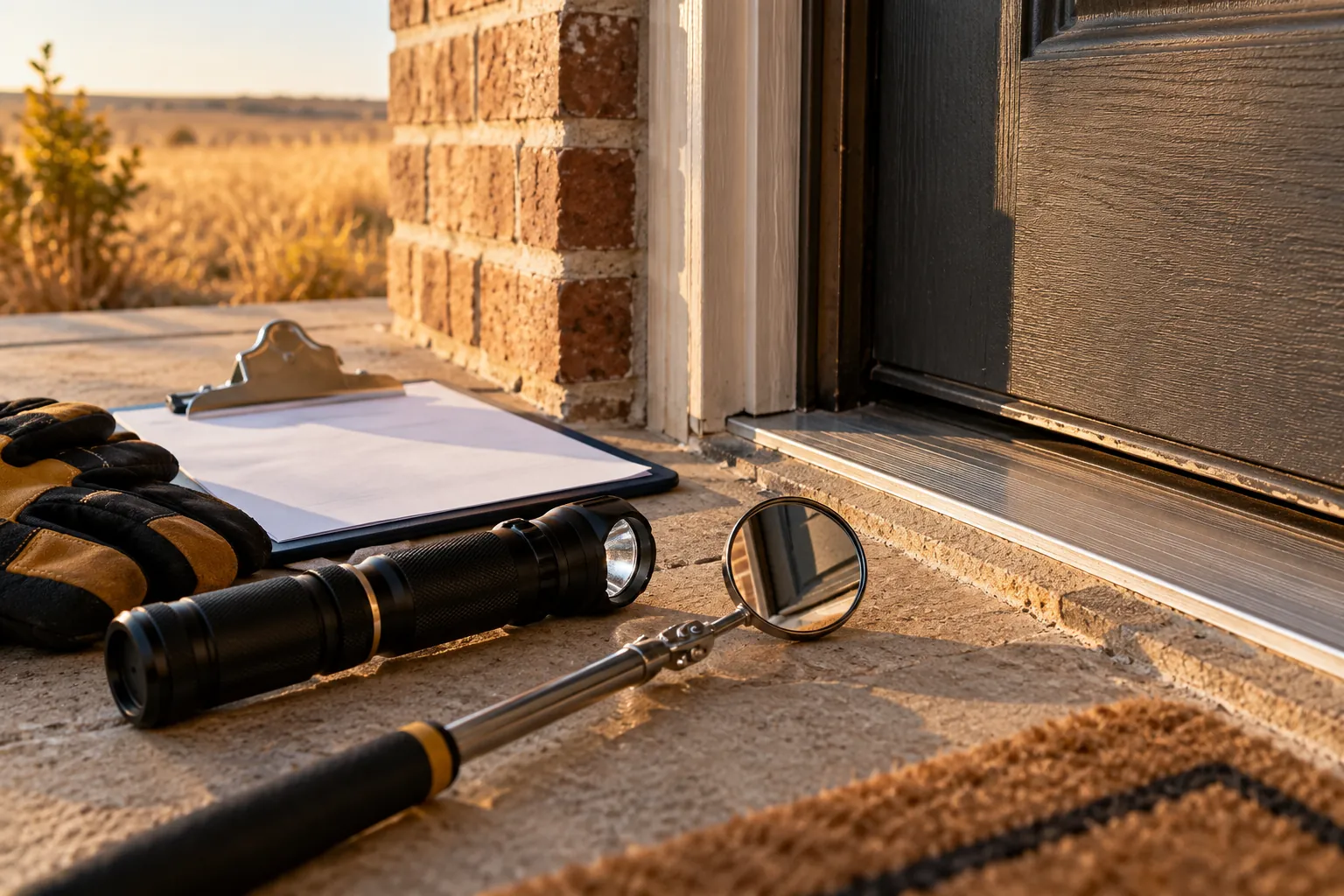
A short record is more useful than a long guess. Note the room or exterior location, the date, the approximate number seen and whether the activity repeats. Describe size in ordinary terms if you cannot measure safely. Record whether the pest was alive, a dead specimen, a web, a damaged package or a noise. Keep photographs of property evidence separate from photographs of people, documents or valuables.
Include recent changes that could matter: a delivery of stored items, a plumbing leak, work around a door, an extended period with the garage open, or a pest treatment already attempted. These details are clues rather than proof. A provider should be able to explain how they influence the inspection and which conclusions still need confirmation. Keep product packaging from previous treatments so the ingredients and application directions can be reviewed accurately.
Ants: follow the pattern
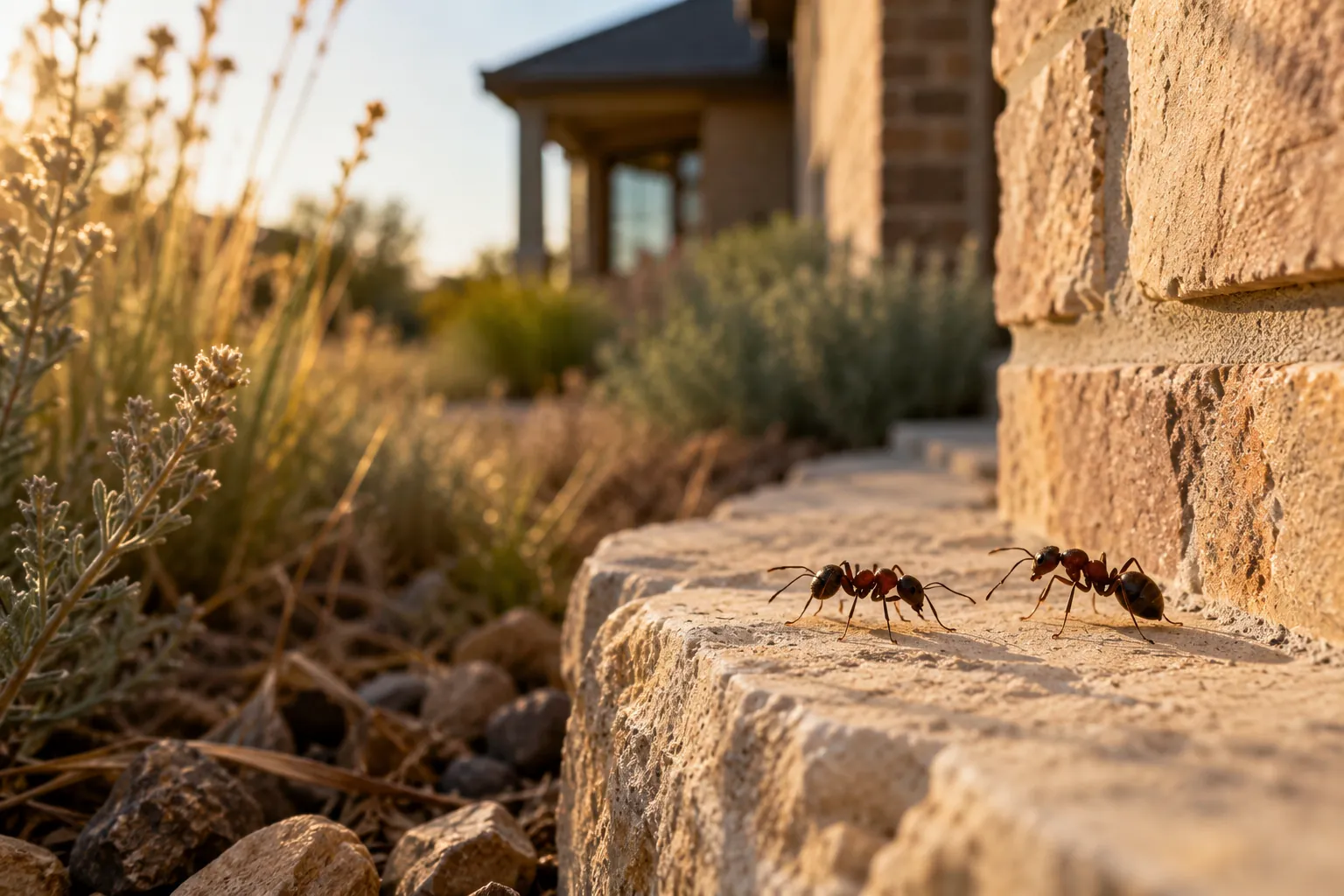
A trail is information. Before wiping it away, make a note of the direction and the locations it connects. An ant seen beside a window, another under a sink and a third in a pantry do not automatically belong to one colony. Identification and observation help determine whether the issue involves occasional foraging, an established route or a nest that needs further investigation.
For a service discussion, focus on what keeps recurring despite ordinary cleanup. Ask how the proposed approach relates to the ant identified and what changes you should expect to see after treatment. Avoid treating every mound or outdoor insect as the same problem. The ant control page explains how to organize indoor and exterior observations, what to ask about bait-based approaches, and how to assess the follow-up plan without relying on an instant disappearance promise.
Cockroaches: inspect the hidden places
The useful question is not simply whether a cockroach entered the house. It is whether there is ongoing activity, where it is concentrated and what supports it. A kitchen with repeated sightings needs a different investigation from an isolated insect beside an exterior threshold. Cabinets, appliance edges, plumbing penetrations and nearby storage can all be relevant inspection locations when they match the evidence.
Prepare a room-by-room account instead of moving everything through the house at once. Mention newly acquired appliances or stored materials, any moisture problem and previous products used. Ask a provider how activity will be measured over time and how the treatment will be adjusted if the original explanation does not fit. A plan should include practical preparation directions and reasonable follow-up expectations, not simply a promise that one application solves every cockroach situation.
Termites: make the finding specific
Wood damage deserves a careful explanation. A damaged board, a discarded wing or a tube-like mark may justify inspection, but none should be used casually to sell a whole-property treatment. Ask the inspector to identify the evidence, show its location and explain what is known about current activity. Keep part of a suspicious mud structure intact so there is something meaningful to examine.
Termite proposals can differ in method, monitoring and continuing obligations. Compare the inspected area, inaccessible spaces, treatment boundaries, renewal terms and any written retreatment or repair provisions. Those details matter more than a broad protection slogan.
Rodents: connect removal and exclusion
A rodent problem needs an explanation of access as well as a plan for activity already inside. The useful service conversation includes the suspected animal, evidence location, accessible openings, device monitoring and the order in which work will happen. A quote for setting devices should not be mistaken for a complete exclusion proposal. Ask what is included before comparing prices.
Garages, attached storage and utility penetrations deserve attention when they connect to the signs you have observed. Do not seal an active opening blindly or disturb contaminated material just to make a photograph. Tell the provider about pets, stored animal feed and areas that cannot be safely accessed. The rodent control page gives you a practical checklist for discussing removal, entry repairs, cleanup scope and the evidence used to decide whether the issue is resolved.
Spiders: manage the encounter
One spider outdoors and repeated spiders in a bedroom are different situations. Start by noting the setting, frequency and whether webs or other insects are present. A service recommendation should explain why management is appropriate for the specific space rather than treating the entire yard as an enemy. Identification matters, especially when the concern involves a suspected medically significant species.
Keep hands away from unidentified spiders and concealed areas. Do not handle a specimen for a closer photograph. The spider service page focuses on sensible inspection questions, occupied areas, storage habits and prevention. If someone needs medical attention after a suspected bite, seek healthcare guidance directly; a pest information website cannot identify a medical cause or provide treatment. For the property itself, a calm, evidence-led plan is more useful than a frightening label.
What a useful inspection should answer
A strong inspection is a decision-making visit. It should establish what evidence was found, which areas could be checked and which remain uncertain. It should connect the proposed service to a target pest and a defined location. Ask whether the provider will supply a written summary or marked photographs so you can remember the findings after the conversation.
The scope should also distinguish pest work from building work. Repairing a leak, correcting a door fit, replacing damaged material or addressing a drainage concern may require a separate professional. A pest service should not quietly imply that all of those tasks are included. When the work depends on another repair, ask who coordinates the sequence and how the provider will check whether the condition has been corrected.
- Identify the pest or state clearly what remains uncertain.
- Record the evidence and the spaces actually inspected.
- Explain the proposed method and the reason for choosing it.
- List preparation, access, follow-up and any excluded repair work.
- Define what a successful result will look like and when it will be reviewed.
Prepare without turning the house upside down
Until a provider gives specific instructions, concentrate on access and accurate information. Keep a clear route to the affected room. Make a note of locked gates, animals that need securing, an attic hatch or a cabinet that is difficult to reach. Tell the provider if moving an appliance or stored material would be unsafe. Preparation should fit the proposed work, not a generic instruction to empty every room.
Bring together any previous service paperwork, treatment dates and observations since that work. If you rent, involve the property manager early enough to clarify who may authorize access and treatment. In a shared building, record unit-specific findings without guessing what is happening elsewhere. Coordinated information can improve the investigation while keeping the conversation factual and respectful of neighboring households.
A stronger perimeter starts with small details
Practical prevention begins with conditions you can see and maintain. Look at the fit of doors, the condition of screens, accessible gaps around service penetrations and the organization of stored materials. Keep inspection zones visible where possible. A provider can help distinguish an opening that needs attention from a building feature that must stay functional for drainage, ventilation or equipment operation.
Inside, connect recurring pest activity with water, food access and shelter. A small leak, pet feeding area or crowded storage corner may deserve more attention than a large open room with no signs. Prevention is not a claim that housekeeping alone prevents every pest problem. It is a way to remove avoidable supports and make future changes easier to notice. Keep a simple maintenance list so those repairs do not disappear after the first quiet week.
Use changes as inspection reminders
A calendar can remind you to inspect; it cannot tell you what pest your home has. Check the property after work around doors or utilities, when stored items are brought indoors, and when the use of a garage or outbuilding changes. Review any recurring location rather than assuming that the next season requires the same treatment as the last one.
For Amarillo households that travel or leave a property unoccupied, plan who will notice leaks, damaged screens or renewed activity. For a home with frequent deliveries, look at how boxes move from a garage or porch into storage. For a business or rental, establish one way to record sightings so separate reports can be compared. These are operating habits, not a promise that every pest will stay outside. Their value is earlier, clearer information.
Compare the work you are buying
The phrase pest control can describe a single visit, a defined series of treatments or an ongoing agreement. Ask which pests and structures are covered, what triggers a return visit and whether that return carries a separate charge. Termites, rodents and repair work may sit outside a general household pest plan. A short exclusion list can be just as important as the headline offer.
A useful proposal explains the initial visit, future visits, preparation duties and the conditions attached to any guarantee. Ask how cancellation and renewal work before agreeing. We do not publish an invented Amarillo average or advertise a price that has not been provided by an actual business.
Make your household part of the plan
Children, pets, aquariums, food preparation areas and people with specific concerns can affect how a service is planned. Share relevant access and use information with the provider before treatment. Ask for the applicable preparation and reentry directions in a form you can keep. Never rely on an unqualified label such as harmless or chemical-free as a substitute for actual product and application information.
You can also state practical preferences. You may want an explanation before furniture is moved, notice before a gate is opened, or a clear plan for a home office that cannot be interrupted during a particular window. Those details help turn a broad quote into a workable appointment. A provider should confirm what it can accommodate and identify any limits before you commit to the service.
Measure what happens next
A good follow-up conversation compares current findings with the starting record. Are sightings less frequent? Are they occurring in the same place? Has the original entry condition been repaired? Has a monitoring device changed? These questions are more useful than judging success from one quiet evening or one insect found later.
Keep the service report and record any directions about cleaning, device access or returning to treated areas. If the pattern changes, report the change rather than adding uncoordinated products. Ask in advance how the provider handles ongoing activity and what evidence will lead to a different approach. A plan that explains its next decision gives you something concrete to evaluate, even when complete resolution requires more than one step.
Amarillo is the focus
This website focuses on pest control information for Amarillo, Texas, including the practical differences between a detached home, a shared building and a property with separate storage. The service-area page helps organize location and access details for addresses in the Amarillo area. City and county references provide context; they do not confirm that a technician is available at a particular address.
Before any future booking, the responding provider must confirm the location, requested pest service, timing and authority to enter the property. No service radius, arrival time or same-day promise is implied here. That distinction keeps the first conversation useful: you can arrive with the right observations and questions, then obtain a real availability answer from the business that would perform the work.
Common pest control problems in Amarillo, TX
These are the problems that come up most often for Amarillo homeowners. Each one links the symptom to what a provider will look for, so you can describe it clearly when you call.
Subterranean termites
Subterranean termites travel from the soil to wood through mud tubes on foundation walls and piers. Swarms of winged termites in spring signal a mature colony nearby. An inspection names the species, maps the activity and chooses between liquid termiticide and bait stations.
Wasps and mosquitoes after rain
Aedes and Culex mosquitoes breed in standing water, from bottle caps and plant saucers to ponds and clogged gutters. Draining containers weekly, treating water that cannot be drained with larvicide and a barrier treatment on resting areas control most yards.
A year of pest control in Amarillo
The seasons change what homeowners in Amarillo see and when to act. Ants and wasps are active in warm months, mosquitoes follow rain, and mice and spiders move indoors as nights cool.
| Season | What to watch | What to do |
|---|---|---|
| Spring | Termite swarms, ants, wasps starting nests | Inspect the foundation, treat early nests, trim plants back |
| Summer | Mosquitoes, cockroaches, fire ants, scorpions | Remove standing water, treat the perimeter, seal door gaps |
| Fall | Rodents and spiders looking for shelter | Seal gaps, screen vents, set traps and clear clutter |
| Winter | Rodents in attics and garages, indoor roaches | Check insulation and noises, plan repairs for spring |
Pest control methods compared
Providers around Amarillo use a mix of the methods below. The right mix depends on the species, the building and where the activity is, so ask the provider to explain why each method was chosen for your property.
| Method | Best for | What to know |
|---|---|---|
| Residual perimeter spray | Ants, spiders, roaches and crickets coming in from outside | Applied around the foundation, door frames, window frames, eaves and utility entries. It needs reapplying on schedule. |
| Gel and granular bait | German cockroaches, ants, fire ants | Insects carry bait back to the nest. Do not spray repellents near it. |
| Dust in wall voids | Roaches, ants, carpenter ants and wasps in voids | Reaches cracks and voids a spray cannot, and lasts a long time when kept dry. |
| Insect growth regulator (IGR) | Roaches, fleas, bed bugs | Stops juveniles from becoming breeding adults. Works alongside a bait or spray. |
| Exclusion and sealing | Rodents, ants, spiders, scorpions | Closes gaps with copper mesh, steel wool, sealant and door sweeps so pests cannot return. |
Who answers when you call Pest Control Amarillo TX
Pest Control Amarillo TX is an independent referral website. Call Now connects you with an independent provider that serves your ZIP code in Amarillo, Texas. The provider confirms the address, inspects the property and gives you the scope in writing, and you decide whether to go ahead. Coverage covers Amarillo and requests also reach providers serving Canyon, Bushland, Lake Tanglewood, Washburn and Wildorado.