
Spiders worth knowing about
Black widow
Shiny black with a red hourglass on the underside. Nests in cluttered, dark, undisturbed places such as woodpiles, meter boxes and garages. Bites are rare but medically significant.
Brown recluse
A violin-shaped dark mark on a light brown body, plus six eyes set in three pairs, identify it. It belongs to the central and southeastern states and is unusual elsewhere, and it hides away in boxes, closets and storage.
Wolf spiders and cellar spiders
Wolf spiders are fast, hairy ground hunters that wander indoors. Cellar spiders have long thin legs and hang in corners and basements. Both are generally harmless.
Why spiders move into homes
Where there is food, spiders follow. Ants, flies, crickets and moths in a house bring spiders in to hunt them. Shelter and a way in come from clutter, boxes, stacked firewood, outdoor lights that draw insects, and gaps around doors and windows.
Spraying webs achieves less than cutting back both the insects and the hiding places, which is what actually lowers spider numbers.
Keep spiders out of the house
- Seal gaps around windows, doors, pipes and vents
- Vacuum corners, window sills and the garage regularly
- Keep firewood and debris away from the foundation
- Store items in sealed plastic bins instead of cardboard
- Reduce outdoor lighting at night near entrances
How spider control is done
- Sealing gaps, installing door sweeps and replacing white outdoor bulbs with warm-toned bulbs
- Dust in voids and cracks where spiders hide
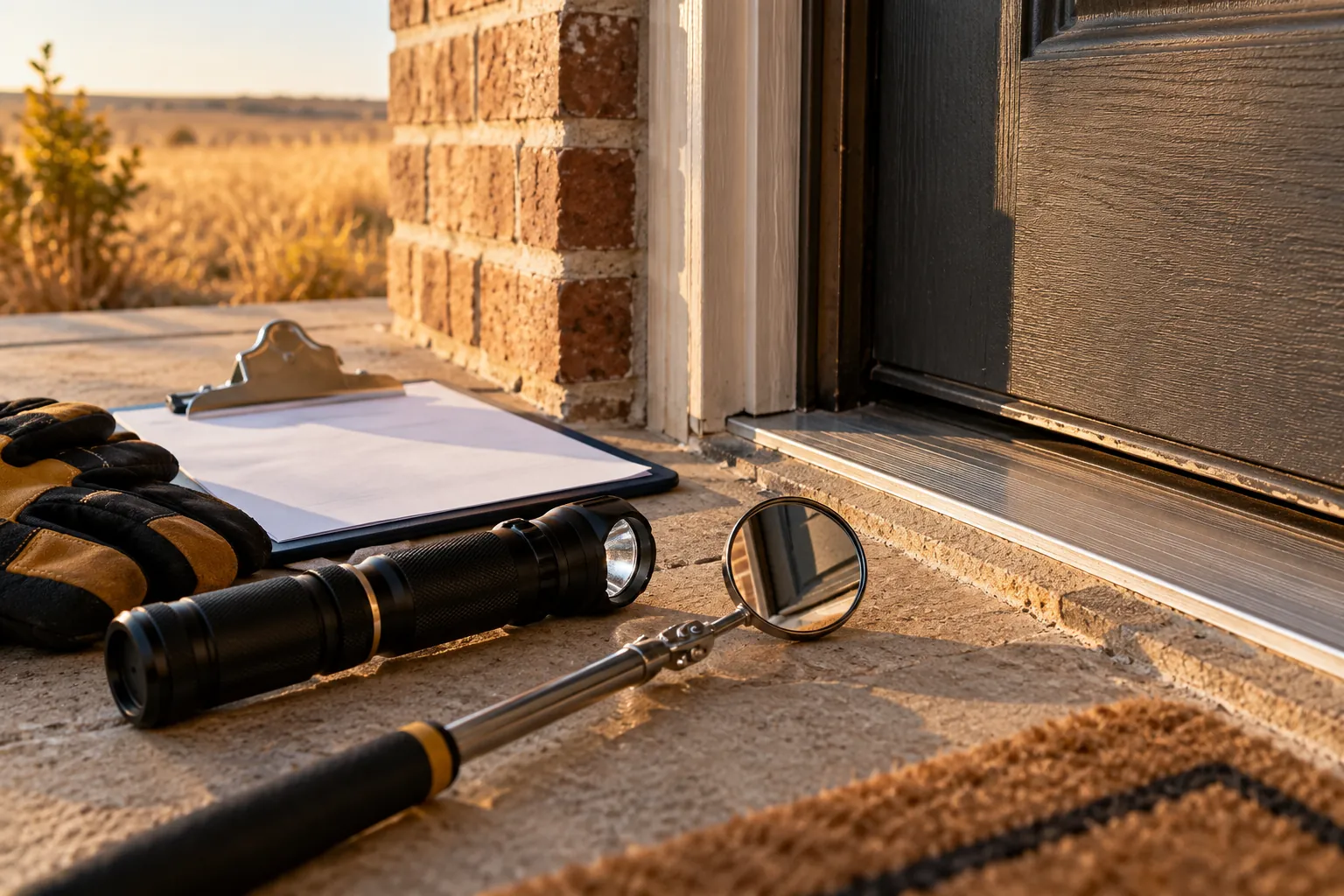
- Inspection of garages, eaves, attics, crawl spaces and window frames
- Residual perimeter treatment around doors, windows and foundation
- Web and egg-sac removal by vacuum or brush
Questions to ask before you agree to any spider control
- What species or problem did you find, and what did you see that proves it?
- Which products, baits or devices will you use, and where will they go?
- What will you seal, remove or fix, and what stays my job?
- Who is on site, and can you show the state licence or applicator ID for the work?
- What will you write down for me: scope, exclusions, follow-up and product list?
- How many visits are in the plan, and what happens if activity returns?
How a spider control visit works, step by step
A good visit follows the same order every time, whatever the pest. Knowing the order helps you compare what each company offers and spot a visit that skips the first two steps.
- Inspection: the technician walks the outside first (foundation, vents, utility lines, eaves, fence lines, mulch) and then the inside (kitchen, bathrooms, garage, attic or crawl space).
- Identification: the species is named from the insect, droppings, damage or trail, because the right product and method depend on it.
- Plan: the provider explains what will be done, which products or devices will be used, and what you need to do before and after.
- Treatment or exclusion: the work is done in the places the inspection found, not by spraying every room.
- Follow-up: you get a date for the next check and a clear answer on what to report if activity returns.
Prepare your Amarillo home before the visit
Getting ready takes less effort than most people expect. A few small steps speed up the inspection, help the product do its job, and leave your rooms mostly as they are.
- Tell the provider about pets, fish tanks, asthma, pregnancy or any health concern in the home so the plan fits.
- Clear a path to the garage, water heater, under-sink cabinets, attic hatch and crawl space door.
- Put away food, pet dishes and children's toys from the rooms being treated.
- Write down where you saw activity, what time of day, and when it started. Take clear photos or save a sample in a sealed bag.
- Fix a dripping tap or wet spot you know about. Moisture feeds most household pests.
What changes the scope of the work
Even between houses a few doors apart, spider control is not a one-size plan. Look for a written scope that lists the conditions found at your property and explains what each condition meant for the amount of work proposed.
Ask the provider to separate one-time work from recurring visits, and to list anything they could not inspect. A scope that names the attic, crawl space, garage or fence line you worried about is easier to compare than a flat package.
- Whether you want a single treatment or an ongoing plan with scheduled visits
- How far the problem has spread and how long it has been active
- Number of entry points, gaps around pipes and cracks in the foundation or siding
- Size and age of the home, and whether it sits on a slab, a crawl space or a basement
- Access to attics, wall voids, sheds, outbuildings and the yard
What makes spider control different in Amarillo
Amarillo is a High Plains city with wind, hail, cold winters and hot dry summers, and many older brick homes and slab foundations. Playa lakes and irrigation put standing water around the city after rain and support mosquitoes.
Cold nights push mice and spiders into garages and homes in fall. Termites are active in Texas, and wood near soil or leaks raises the risk. What works in one climate or housing style can fall flat in the next, so ask each provider to explain how these local details shape the plan for your property.
Spider control across Amarillo and nearby cities
These Amarillo, Texas are covered by Pest Control Amarillo TX: . Requests can also be passed to providers who serve Canyon, Bushland, Lake Tanglewood, Washburn and Wildorado. Because coverage is confirmed address by address, mention your ZIP code when you phone.
Start by using Call Now at the top of the page and explaining what you have noticed. You will reach an independent provider in your area, who confirms the address, inspects the property and puts the scope in writing for you.